When someone passes away, the loved ones they left behind hold a funeral and either have them buried or cremated. However, there is a company in Russia called KrioRus that offers a different kind of after-death service, and it is called cryonics.

If you haven’t heard of cryonics, it is the freezing and storing of a dead human body or a human brain in the hopes that there may be scientific breakthroughs in the future that could revive them.
Apparently, there are hundreds of people from around 20 countries who believe in it and have signed up for KrioRus’ services. One of them is Alexei Voronenkov. After his mother passed away at 70 years old, he availed of their service and had her brain frozen in the hopes that a groundbreaking scientific discovery will one day be able to give her life again.
This decision made by Voronenkov was said to be influenced by his love for his mother. He believes that it is the only chance for them to be reunited in the future. He himself wants to undergo cryonics when he passes away.
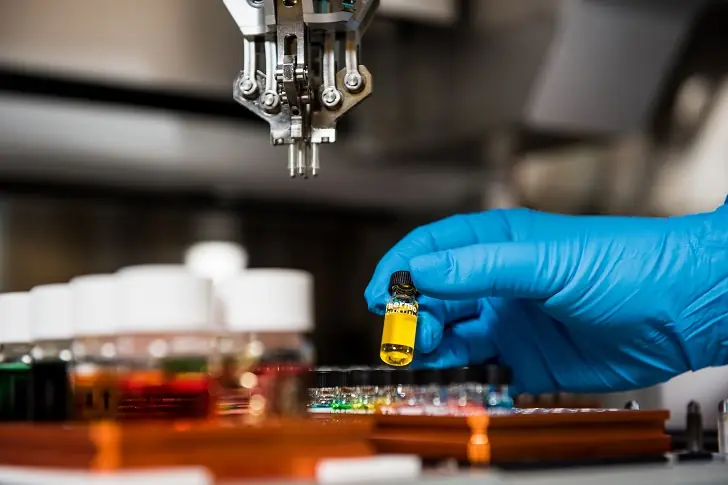
This is just one of around 71 brains and human cadavers—or patients, as what KrioRus calls them— that are currently in the facility outside of Moscow. These patients are stored at -196 degrees Celsius in 7-meter tall vats filled with liquid nitrogen that are in a corrugated metal shed. The extremely cold temperature is to stop them from deteriorating. However, there are no current evidence that science will be able to bring them to life.
According to the head of the Pseudoscience Commission of the Russian Academy of Science, Evgeny Alexandrov, cryonics does not have any scientific basis and is a purely commercial venture.
As for KrioRus’ director, Valeriya Udalova, she expressed that humans will likely be able to develop technology to revive the dead in the future, but there is no guarantee. Udalova, herself, had her dog frozen when it died in 2008.
According to statistics, the average monthly wages of Russians is at $760. But if they want to avail of KrioRus’ services, they have to pay $36K for a whole body and $15K for a brain. However, the prices are a little higher for non-Russians
Voronenkov also expressed his hopes that time will come when producing artificial bodies and organs will be made possible. He is hopeful that his mother’s brain can then be integrated into a new body in the future.
KrioRus’ director, Udalova, believes that relatives paying for the preservation of their loved one’s bodies is a sign of their love for them. She said that they are just trying to bring hope and are doing more than just arranging for a nice burial or collating a photo album for their deceased loved one.