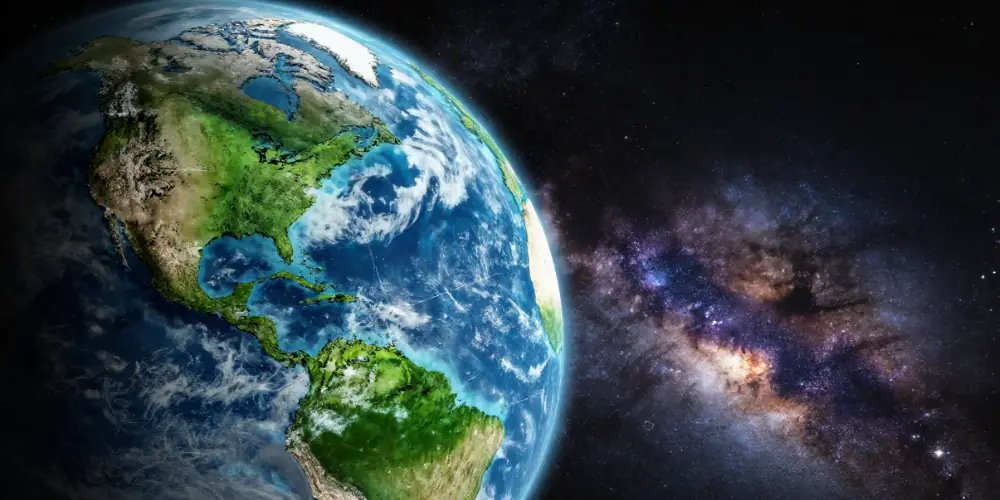
Life on Earth may not have started through competition alone. A growing body of scientific research points toward cooperation, shared chemistry, and molecular partnerships as the real drivers behind the rise of living organisms.
This shift in thinking is changing how scientists study evolution, cellular biology, and even the possibility of alien life across the universe.
For decades, biology focused heavily on survival, adaptation, and natural selection. The image of nature as violent and competitive shaped modern scientific thinking after Charles Darwin introduced the theory of evolution. Yet many researchers now argue that cooperation played an equally important role from the very beginning.
The idea sits at the center of Rowan Hooper’s book “Togetherness,” which examines how symbiosis shaped life on Earth. Symbiosis means “living together,” and according to modern biology, it extends far beyond familiar examples like lichens or coral reefs.
In fact, nearly every complex organism alive today exists because separate life forms once merged and evolved together.
Symbiosis Exists Everywhere in Nature
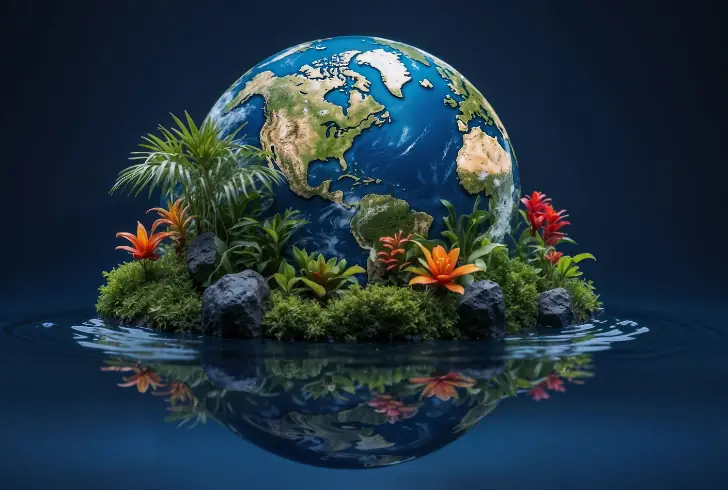
Every ecosystem on Earth depends on biological partnerships. Trees rely on underground fungal networks to absorb nutrients. Coral reefs survive because algae live inside coral tissues. Human bodies carry trillions of microbes that help digestion, immunity, and brain function.
These relationships are not rare biological accidents. They are foundational systems that allow life to survive and grow.
Scientists now recognize that complex cells themselves formed through ancient symbiosis. Plants, animals, and fungi all contain structures that were once independent bacteria. Over time, these organisms merged permanently and became the building blocks of advanced life.
Microbiologist Lynn Margulis spent years gathering evidence for this theory. Her work showed that mitochondria — the energy-producing parts of cells — likely began as free-living bacteria before becoming permanent residents inside larger cells. The same applies to chloroplasts in plants, which carry out photosynthesis.
This realization changed biology. Complex life did not emerge through isolation. It emerged through biological cooperation.
The Search for Life’s First Spark
The question of how life began has fascinated scientists for centuries. Charles Darwin rarely discussed the topic publicly, though he hinted at it in an 1871 letter to botanist Joseph Hooker. Darwin imagined life forming in a “warm little pond” filled with chemicals, heat, light, and electricity.
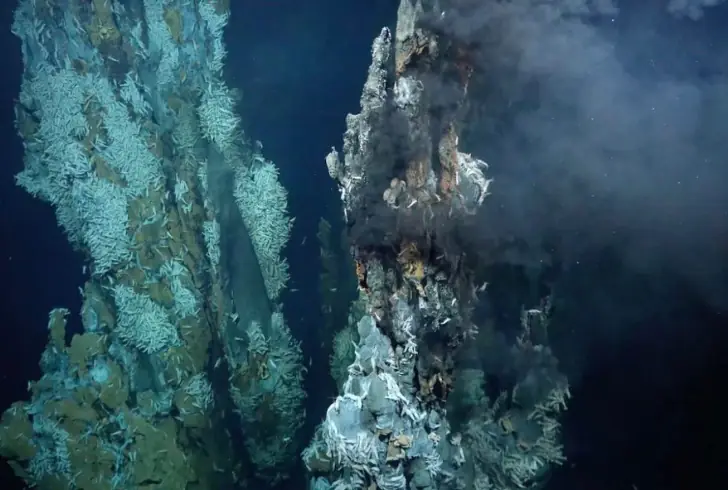
That image influenced scientific thinking for generations. Yet many researchers now believe life may have started somewhere far more extreme: deep-sea hydrothermal vents.
These underwater systems release hot alkaline fluids through cracks in the ocean floor. Tiny mineral pores inside the rocks create conditions that resemble primitive cellular compartments. Scientists believe these natural chambers may have supported the first biochemical reactions.
Biochemist Nick Lane of University College London has become one of the leading voices behind this theory. According to Lane, hydrothermal vents provide an ideal bridge between geology and biology.
“The internal pores of the vents have cell-like structures with electrically charged catalytic surfaces, while the continuous flow gives continuous reactivity,” Lane explained.
This matters because living systems require constant chemical activity. Hydrothermal vents naturally create energy gradients between hot alkaline fluids and colder acidic seawater. Those gradients may have powered the earliest metabolic reactions long before true cells existed.
Old Ideas Are Returning With New Evidence
Several major scientific thinkers laid the groundwork for today’s theories about life’s origins.
In 1866, Ernst Haeckel proposed that life emerged directly from inorganic matter. Decades later, physicist Erwin Schrödinger argued that living organisms remain deeply connected to their environment through energy exchange. During the 1960s, microbiologist Carl Woese suggested that early life existed as a loose communal network rather than isolated organisms.
Then physicist Freeman Dyson introduced another influential idea in 1985. Inspired by Schrödinger and Margulis, Dyson proposed that life developed in two separate stages.
First came protocells — primitive structures capable of metabolism and energy reactions. Later came RNA molecules that stored genetic information. Dyson believed these two systems eventually merged in a process similar to symbiosis.
Modern experiments are now testing parts of that theory inside laboratories.
Scientists Are Recreating Early Earth Conditions
Researchers at University College London are attempting to mimic ancient hydrothermal vents to study how non-living chemistry may have transitioned into biology.
Scientist Feixue Liu uses a Y-shaped experimental setup designed to simulate interactions between ocean water and hydrothermal vent fluids. One side carries ocean-like liquid while the other introduces vent fluid rich in chemicals thought to exist billions of years ago.
The experiments happen inside oxygen-free chambers that recreate conditions from early Earth roughly four billion years ago. Sensors track whether organic molecules form during the reactions.
The findings are reshaping scientific understanding of metabolism.
Many biochemical reactions appear capable of happening naturally without genes or living cells directing them. Certain molecules organize themselves because chemical systems naturally move toward stable energy states.
Scientists describe this process as movement toward a thermodynamic minimum. In simpler terms, molecules settle into arrangements that require less energy and become more stable over time.
That behavior may explain why key ingredients for life form so easily across the universe.
Metabolism May Have Existed Before Genes
One of the strongest discoveries in origin-of-life research involves the acetyl-coenzyme A pathway. This metabolic system helps cells release energy and appears in every known life form on Earth.
Research by Bill Martin at the University of Düsseldorf suggests the pathway existed before the genes and enzymes that currently control it.
That finding changes the traditional sequence of life’s development.
Scientists once assumed genes appeared first and programmed metabolism afterward. Current evidence suggests the opposite may be true. Metabolic chemistry may have emerged naturally, while genes evolved later to improve and stabilize those reactions.
Nick Lane summarized the idea clearly:
“We think of metabolism as being genetically encoded, but work over the last decade shows it is actually spontaneous chemistry, a network of thermodynamically favored reactions.”
Researchers have also shown that adenosine triphosphate, known as ATP, can form naturally under certain conditions. ATP acts as the universal energy currency in living cells, from bacteria to whales.
This suggests many of life’s core systems may reflect chemical processes already happening in nature long before organisms existed.
How RNA May Have Entered the Picture
Freeman Dyson believed RNA invaded existing protocells after metabolic systems had already formed. New research presents a slightly different possibility.
Scientists Stuart Harrison and Raquel Nunes Palmeira suggest random nucleotides inside protocells may have naturally acted as templates for peptides, which are chains of amino acids that later became proteins.
“You now have information which, yes, it’s random at first, but that information is getting loosely translated into function,” Harrison explained.
This process may have allowed primitive genetic coding to emerge gradually instead of appearing suddenly through complex machinery.
Natural selection only requires three ingredients:
– Heredity
– Variation
– Different survival outcomes
According to current models, primitive RNA sequences capable of supporting protocell growth would naturally become more common over time.
That means evolution could begin before fully developed cells even existed.
Solving the “Paradox of Heredity”
Origin-of-life research has long struggled with a major problem known as the paradox of heredity.
Modern cells rely on ribosomes to translate genetic information into proteins. Yet ribosomes themselves are highly complex systems that require evolution to develop. The problem creates a loop: evolution requires heredity, but heredity depends on machinery produced through evolution.
Raquel Nunes Palmeira believes early chemistry may solve this puzzle.
“But what if there’s some sort of translation that can happen before all of that machinery?” she asked.
Computer models developed by her team suggest random RNA strands can stabilize into functional genes capable of supporting protocell growth. Simple translation systems may therefore arise naturally without advanced biological structures.
Carl Woese proposed something similar decades earlier. He believed random RNA fragments and amino acids possessed natural chemical attractions that encouraged primitive protein formation.
Instead of isolated organisms competing immediately, early life may have existed as a communal chemical network where molecules constantly exchanged materials and functions.
Asteroids Are Changing the Debate
Interest in extraterrestrial life intensified after scientists analyzed material from the asteroid Ryugu in March. The samples contained all five nucleobases used in DNA and RNA:
– Adenine
– Cytosine
– Guanine
– Thymine
– Uracil
Scientists also found many organic compounds inside asteroid Bennu.
Some researchers interpreted these discoveries as evidence that life’s ingredients arrived on Earth from space. Yet another interpretation may be even more significant.
The building blocks of life appear to form naturally throughout the cosmos.
According to Stuart Harrison, these molecules may represent universal thermodynamic outcomes rather than rare accidents.
“It looks to me more like these chemicals are just a thermodynamic minimum, perhaps at the universal scale,” Harrison said.
If that theory is correct, life may emerge wherever suitable chemistry and energy conditions exist.
Could Alien Life Resemble Earth Life?
The possibility carries major implications for astronomy and planetary science.
If metabolism, nucleobases, and energy systems naturally arise through chemistry, alien life may not be completely unfamiliar. Different planets could independently produce organisms built from similar molecular foundations.
Nick Lane argues that life itself may simply reflect chemistry moving toward stable energetic states.
“Amazingly, if you start from hydrogen and carbon dioxide, the formation of cellular biomass is favored thermodynamically,” Lane explained.
That perspective removes the need for supernatural explanations or rare cosmic accidents. Life may emerge because chemistry naturally pushes matter toward biological organization under the right conditions.
Saturn’s moon Enceladus has become one of the most promising places to test these ideas. The icy moon contains underground oceans and hydrothermal vent activity similar to Earth’s deep seas.
If similar chemical reactions occur there, scientists may eventually discover signs of metabolism beyond Earth.
A New Definition of Life Is Emerging
The latest theories do not fully match Freeman Dyson’s original idea of separate systems merging through symbiosis. Still, many researchers believe cooperation remains central to the story.
Harrison described the process as “molecular cooperativity” between chemical reactions, RNA polymers, and primitive peptides.
That concept aligns closely with Carl Woese’s description of early life as “a loosely knit, diverse conglomeration of primitive cells that evolved as a unit.”
Instead of isolated organisms fighting for dominance from the beginning, early Earth may have resembled a vast communal chemistry experiment. Molecules interacted, exchanged functions, and gradually organized into stable living systems.
The ancient hydrothermal vents beneath Earth’s oceans may have acted less like battlefields and more like crowded workshops where chemistry slowly crossed the line into biology.
Modern origin-of-life research suggests life likely emerged through cooperation among molecules and chemical systems, not isolated competition alone.
Evidence from hydrothermal vents, protocells, RNA chemistry, and asteroid-delivered compounds indicates that life may form naturally when energy, water, and carbon-based molecules interact. Metabolic processes may have developed before genetic systems, and early chemical networks likely existed before true biological species.
This view also expands the search for extraterrestrial life, suggesting that similar chemistry could exist on other planets with the right conditions. Overall, life’s origin is increasingly understood as a result of connected, self-organizing chemical systems rather than competition alone.