
Thyroid disorders are not limited to adults; they can also affect children. The thyroid gland produces hormones that play a crucial role in growth and development, so any disruption to its function can have serious consequences for a child’s health. Here’s what parents need to know about thyroid disorders in children.

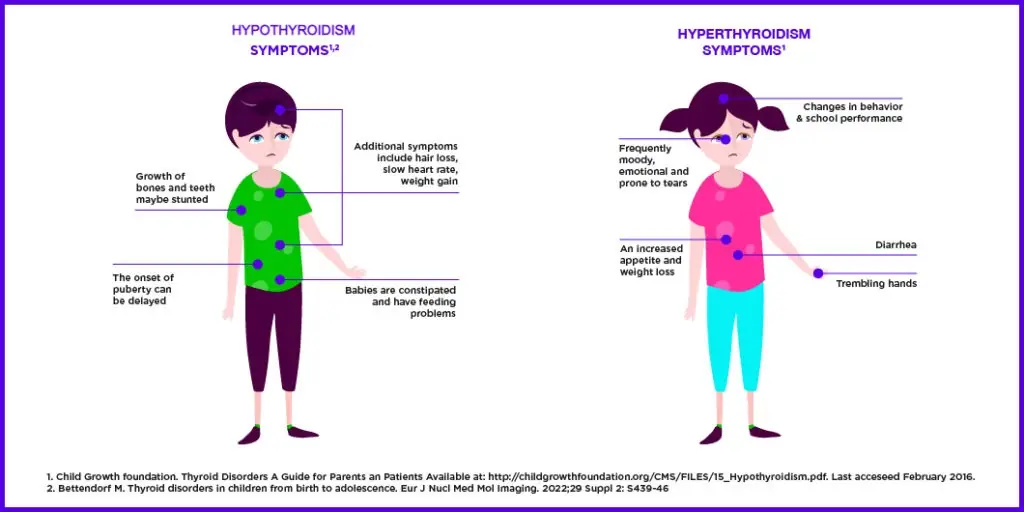
- Hypothyroidism is the most common thyroid disorder in children. It occurs when the thyroid gland is not producing enough thyroid hormone. Children with hypothyroidism may experience developmental delays, poor growth, delayed puberty, and intellectual disability if left untreated. This condition can be caused by a congenital defect or an autoimmune disorder. Newborns are routinely screened for hypothyroidism, and early detection and treatment are critical to prevent long-term health problems.
- Hyperthyroidism, on the other hand, is less common in children than in adults. It occurs when the thyroid gland is producing too much thyroid hormone, leading to symptoms such as weight loss, increased heart rate, nervousness, and tremors. In children, hyperthyroidism can cause growth problems and delay in puberty. It can be caused by an autoimmune disorder or a benign tumor in the thyroid gland.
Diagnosis of thyroid disorders in children involves blood tests to measure the levels of thyroid hormones and thyroid-stimulating hormone (TSH). Treatment for hypothyroidism typically involves a daily dose of synthetic thyroid hormone. In some cases, surgery may be necessary to remove a part of the thyroid gland. Treatment for hyperthyroidism may involve medication to block the production of thyroid hormone or radioactive iodine therapy to destroy the overactive thyroid tissue.
Parents can help prevent thyroid disorders in children by ensuring adequate iodine intake, as iodine is a key nutrient for thyroid function. Foods such as dairy products, seafood, and iodized salt can provide adequate iodine. If parents notice any signs of thyroid disorder in their children, they should consult their healthcare provider promptly to ensure prompt diagnosis and treatment.