
The importance of vaccination in this period should be promoted with utmost intensity to prevent catching the flu. One of the most common characteristics of this period is the spread of the flu to all nooks and crannies of the city, and medical advice has always been that only vaccination can solve the menace. However, some people don’t like taking it because they complain of side effects.
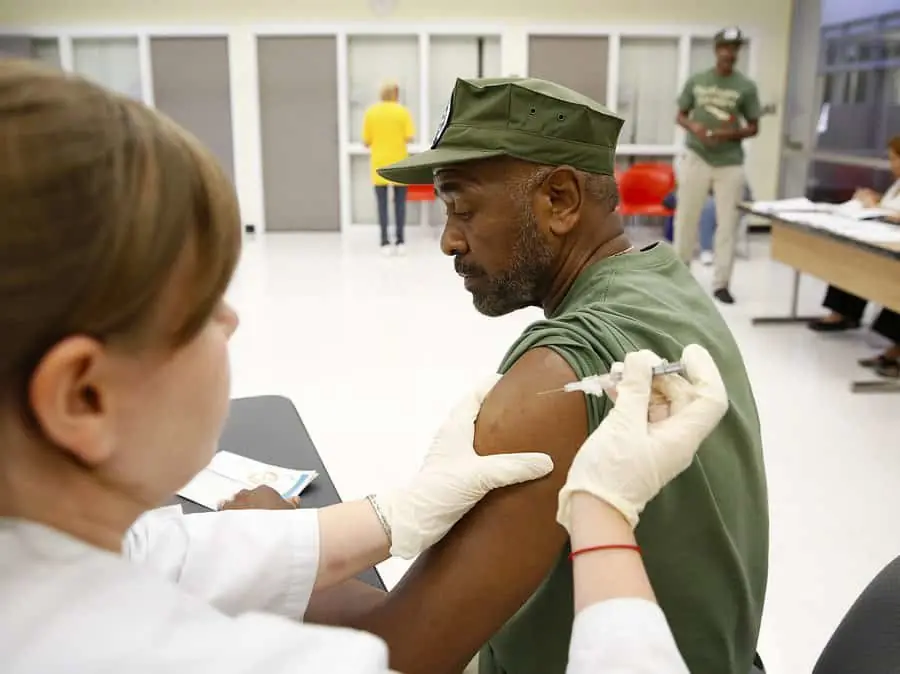
This stereotypical attitude was more expressed on twitter when a famous radio presenter on one popular show, Joe Scarborough, posted on his handle that he wants to start trying out vaccination. His loyal followers vehemently kicked against his decision with their testimonies, which have to do with them getting sick after taking the medication.
One Jackie Hurd said he fell seriously ill after taking the vaccine, so he dares not try it again. A mother by the name Melissa Bhahn tweeted that her son almost died from a flu vaccine he received.
In reality, these people may have experienced the unpleasant side of the medication, but health experts reassured everyone that vaccine “cannot and will not” make patients sick.
Dr. William Schaffner is a disease and infection expert, also preventive health care professor from the University of Vanderbilt. He argued that people can never get sick from getting vaccinated, it’s biologically false.
He explained that this medication is manufactured from a virus that is dead. He added that vaccines usually contain a small portion of moribund virus proteins, which means that patients will only get a tiny part and not a whole virus.
To keep yourself and your home safe during this period of flu, you need to know this.
The proteins are obtained from the exterior part of the dead virus and because of this, they are very strong to boost the patient’s immunity strength, thus making it efficient to work on its purpose. Notwithstanding, the proteins don’t have the formidable agility to encourage the virus of the flu to self-reproduce in the body.

Dr. Schaffner made another point about people mistaking a cold for a vaccine sickness.
Naturally, if the patient begins to feel dizzy or ill during the time he got injected with the vaccine, he would blame the medication for it, which is not the real cause, says Schaffner. He pressed his argument further that when two or more incidences happen side-by-side, they don’t necessarily relate to one another. “Can we attribute the rise of the sun to the crow of the rooster? Absolutely not. Both entities work separately,” he said.
Speaking more on this, a professor at Northwestern University School of Medicine, Dr. Michael Ison, explained that majority of flu patients developed the infection during the season of fall. He went on to say that rhinoviruses spread faster in fall and when people get cold, they believe it’s only about a snot-blocked nose. However, Dr. Michael says, cold can invite more infections through its vulnerability to viruses which will produce sicknesses.
From another point of view, Dr. Zimmerman Richard, a medical professor in family health from Pittsburgh University, said that the location and health center that administers the vaccine shot also matters a lot. Many pharmacy stores and hospitals are filled with sick patients who are lining up for their turn to get treated. Someone may be sneezing beside you, and the germ emission may get into you. Such things are not always prevented by a vaccine shot.
Concerning pain in the arm, around 20% of patients go through arm aches after being injected, but it doesn’t last beyond one or two days then it will subside, Zimmerman assured.
Vaccines can also cause headaches and body weakness in some patients, Schaffner noted. Nevertheless, there is no cause for alarm because it’s natural to feel these symptoms since the immune system is reacting to the shot, so it shouldn’t be interpreted as the flu.
Another noteworthy point is the possibility that the virus may be in the patient’s body after receiving the shot. Ison said if a patient is left bare to the claws of the flu after getting the injection, the body would not have developed enough strength to fight against the virus. This is because the vaccine takes two or more weeks before it gathers its power to combat viruses.
According to a survey conducted by the Centers for Disease Control and Prevention, 46 states are experiencing the infection.
Dr. Schaffner encourages the general public to get vaccinated without delay. There is no harm, and the vaccine will not cause flu. So start the new year with being healthy.